

Description
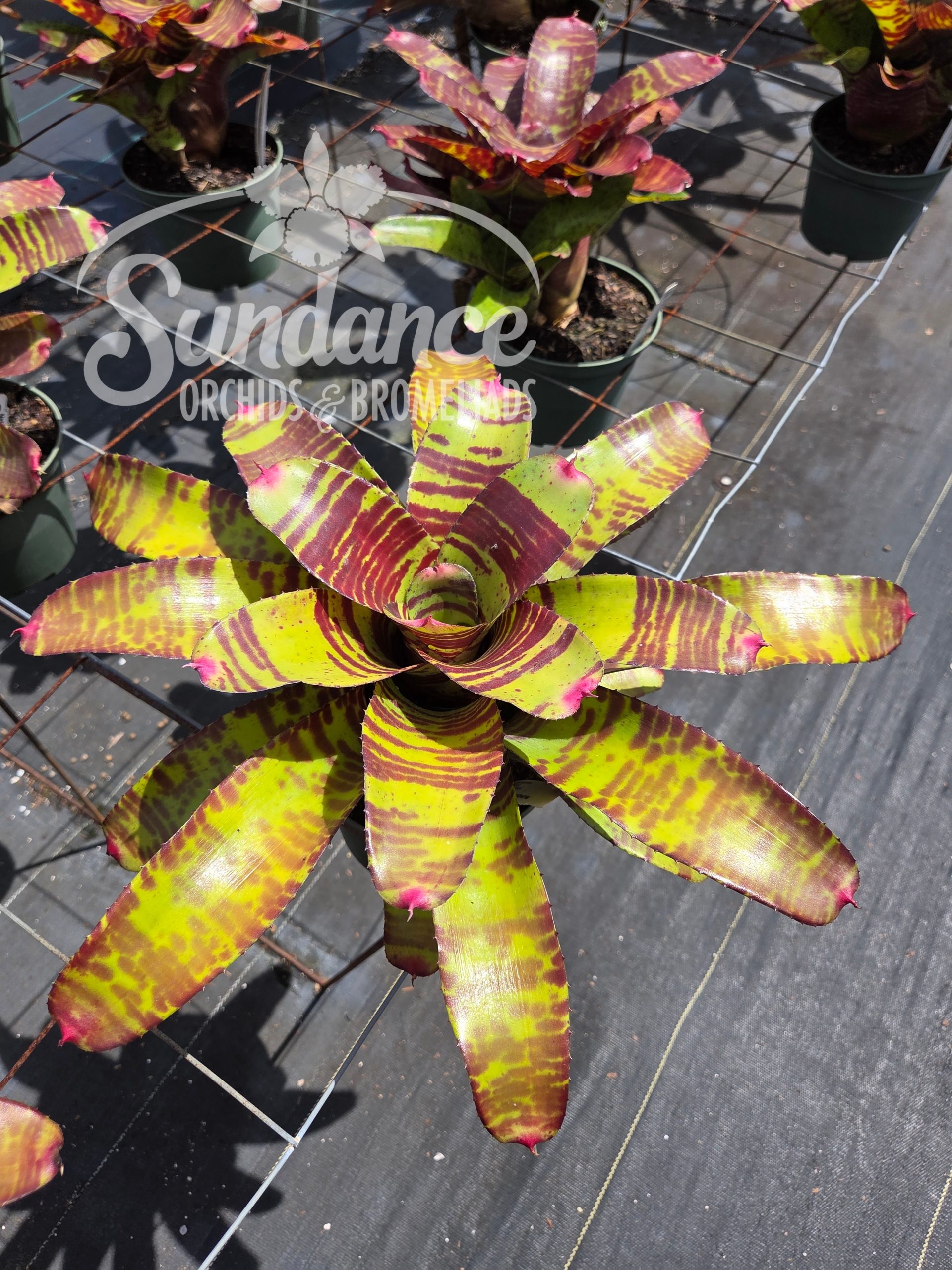
Neoregelia ‘High Voltage’ is a striking tropical bromeliad hybrid that forms a tight, symmetrical rosette measuring approximately 12 to 16 inches wide. This plant exhibits an upright, clustering growth habit featuring glossy, spiny-leaves. It thrives in bright indirect light or strong filtered sunlight, and while it can handle a little bit of direct sun, it should not receive it all day to prevent the foliage from scorching. This light exposure intensifies its beautiful lime-green to golden-yellow foliage and deep maroon cross-banding.
**Plant will ship bare-root**
How to Keep Your Neoregelia ‘High Voltage’ Happy
Caring for this electric, tiger-banded tropical showstopper is incredibly easy! Just follow these simple steps to keep its bold maroon bands and glowing lime-green colors looking their absolute best:
- Step 1: Provide strong, filtered light. The Neoregelia ‘High Voltage’ craves bright, indirect sun or strong filtered light to power up its pattern. Giving it plenty of light is the secret to shifting its glossy lime foliage into a vibrant golden-yellow hue, making those dark, blotchy maroon stripes pop beautifully! Just shield it from harsh, all-day direct afternoon sun to avoid scorching.
- Step 2: Water the central cup. Instead of watering the soil, pour clean water directly into the center “tank” or cup of the plant. Because sun exposure evaporates water a bit faster, check the cup regularly to ensure it stays filled, and flush it out every couple of weeks with fresh water to keep it clean.
- Step 3: Keep the soil lightly damp. Give the soil a tiny splash of water just to keep it from drying out completely. Make sure your pots have excellent drainage so the roots never sit in soggy mud. If you are planting them directly in the ground, be sure to choose an area with great drainage where the soil won’t stay wet.
- Step 4: Keep it warm. This tropical plant loves warmth. If you are growing it outdoors, to be safe just remember to bring it inside if the temperature drops below 50°F (10°C) or protect it from the cold or frost as much as possible.
- Step 5: Fertilize sparingly (or not at all). We recommend using a well-balanced, slow-release fertilizer just once or twice a year. Be careful, though—too much fertilizer or nitrogen will cause the plant to lose its vibrant color and become leggy and stretched-out looking. In fact, some growers prefer not to fertilize at all to get the very best color from the plant!


